Dr. Nejat Tamzok
Last week, for the first time in 32 years, a new oil refinery was commissioned in our country.
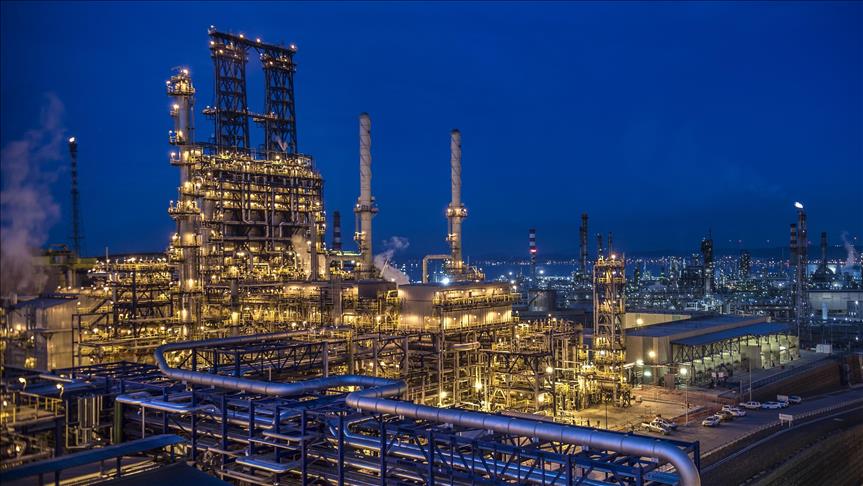
The opening of the Star Refinery, which is the investment of Azerbaijan oil company SOCAR in Izmir Aliağa and has been continuing its test production for a while, was held with a formal ceremony.
The refinery, whose construction lasted for 7 years and cost about 6.3 billion dollars, will meet almost all the raw material needs of petrochemical plant Petkim belonging to the same group.
The plant, which will produce petroleum products such as diesel, aviation fuel, naphtha, LPG and petroleum coke in addition to petrochemical raw materials, will change the oil foreign trade balance of Turkey significantly.
***
Turkey’s annual crude oil import is 25 million tons, while net petroleum products import is around 18 million tonnes. These two items constitute approximately forty percent of our net energy imports.
Crude oil entering the country has been processed only in TÜPRAŞ refineries until now and nearly 30 million tons of petroleum products were obtained.
With the commissioning of Star Refinery, Turkey’s crude oil import will increase to approximately 35 million tons, but production of high value-added petroleum products will increase to the level of 40 million tons.
At Star Refinery, 4.9 million tons of diesel fuel, 1.6 million tons of aviation fuel, 1.6 million tons of naphtha, 260 thousand tons of LPG and 692 thousand tons of petroleum coke will be produced annually by using crude oil to be transported from Azerbaijan to Aliaga Port by ships. Undoubtedly, this production will have a significant impact on Turkey’s energy sector.
The first effect will be on diesel fuel. Last year Turkey’s rapidly increasing diesel consumption was around 24 million tons. Approximately 10 million tons of this was produced by TÜPRAŞ and the rest was imported. The import dependency up to 60 percent in diesel fuel will be reduced to less than 40 percent with the introduction of new capacity.
While naphtha import will completely be set to zero, the new capacity will have a downward impact up to 10 percent on LPG import and up to 15 percent on the petroleum coke import which is heavily used in the cement sector. In the aviation fuel, our position will turn from an importer to a net exporter.
In the final total, our import of net petroleum products will be reduced by around 35 percent by the commissioning of the refinery.
***
Especially considering the growth in the transport sector, it is inevitable that Turkey will need petroleum products more and more over the years. But, it is known that to meet the mentioned products with the import causes a serious pressure on Turkey’s economy.
Thus, increasing the refining capacity in Turkey and producing the high value-added petroleum products in our country to be freed from the burden of imports of petroleum products is absolutely necessary for a sustainable development. In this respect, establishment of a new refinery even after 32 years, is very important.
Ankara/October 2018