by Dr. Nejat Tamzok
Original source: https://www.eurasiareview.com/30062026-england-vs-dr-congo-the-2026-world-cup-and-the-demographic-legacy-of-the-colonial-map-oped/
The imperialist European nations we define today as the “West” colonized and brutally exploited most of the globe during the protracted period stretching from the 15th century to the 1960s, known as the “Age of Colonialism.” This era was built upon ruthless massacres, enslaved peoples, and both cultural and physical genocides. While ancient cultures, languages, and faiths were deliberately erased, the merciless exploitation of enslaved labor was written into the bloodiest pages of human history.
Civil wars fueled by European powers to divide local populations and maintain political control sowed the seeds of endless conflict across colonized nations. In these wars, millions perished, masses were forcibly displaced, and profound suffering was endured due to famine and disease, while countless women and girls fell victim to systemic violence.
Colonialism was the foundational dynamic of capitalist development, and the imperialist “West” built its wealth and industrialization largely on this exploitation. While colonizing nations grew unimaginably rich, they left behind a legacy of poverty, corruption, systemic maladministration, civil wars, environmental disasters, an unceasing exploitation of natural resources, and, ultimately, today’s stark global inequalities. Today, despite having won their independence, many nations still struggle against the structural shackles forged during the colonial era.
Stolen Lives, Stolen Labor
Recently, the United Nations General Assembly overwhelmingly adopted a resolution declaring the colonial-era slave trade “the gravest crime against humanity.” Speaking before the General Assembly, Secretary-General António Guterres openly acknowledged that the prosperity of many Western nations was “built on stolen lives and stolen labor.”
Today, victimized communities and nations are waging a legal and moral battle for justice against those who generated vast wealth through colonialism. The idea that the legacy of slavery and colonialism cannot be swept away with flowery apologies or symbolic gestures—and must instead be met with absolute “reparations”—has become a core agenda item of international law. What is demanded is not merely a financial settlement, but the acknowledgment of a stolen past, the restitution of plundered rights, and an equitable restructuring of global wealth distribution.
The Pitch as a Mirror of the Colonial Map
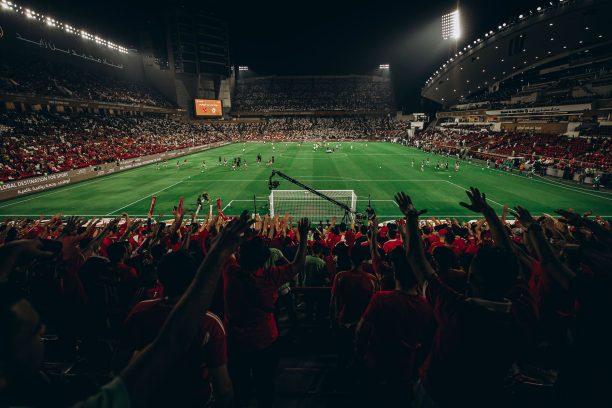
The 2026 FIFA World Cup, which has been underway in North America for about twenty days, is in reality another battleground between former colonizers and the colonized. This tournament is not only the most inclusive in football history; it also serves as a shadow of global power dynamics projected onto the green pitch.
In this tournament of 48 teams, eight former colonial powers face roughly thirty countries that survived the history of colonization. Unsurprisingly, almost all of these eight European nations were tipped as natural favorites for the championship from the outset. Undoubtedly, these countries possess deeply rooted footballing traditions and excellence. Yet, explaining their success solely through economic wealth would be a mistake; one must not overlook the massive flows of “human capital” shaped by the spheres of influence and migration routes of the colonial era.

Looking at the national squads of these countries today, the demographic legacy of the colonial past becomes crystal clear: The players in the French squad have origins that almost perfectly match the country’s former colonial landscape. Stars like Kylian Mbappé and Aurélien Tchouaméni have roots in Cameroon, while Ousmane Dembélé is of Malian descent and Eduardo Camavinga was born in Angola. The cogs of the Belgian football factory are heavily fueled by the Congo Basin—the setting of one of history’s most brutal colonial tragedies. Romelu Lukaku, Loïs Openda, and Youri Tielemans are of Congolese descent; Jérémy Doku traces his roots to Ghana, while Amadou Onana was born in Senegal.
The majority of black players in the English squad are of Caribbean and African descent, hailing from former British colonies. Jude Bellingham and Marcus Rashford have roots stretching to the Caribbean, while Bukayo Saka is of Nigerian descent. Dutch football draws significantly from its former colonies in Suriname and the Netherlands Antilles in the Caribbean. Virgil van Dijk and Georginio Wijnaldum have roots in Suriname, while Memphis Depay, Cody Gakpo, and Jeremie Frimpong are of Ghanaian descent.
In the Portuguese national team, Rafael Leão and Nuno Mendes are of Angolan descent, while William Carvalho was born in Angola. Spain’s rising star Lamine Yamal has roots in Equatorial Guinea and Morocco, while Nico Williams is of Ghanaian descent. Even Germany, whose colonial history was shorter than other European states, features Leroy Sané (Senegal), Serge Gnabry (Ivory Coast), Jérôme Boateng (Ghana), and Antonio Rüdiger (Sierra Leone), while Youssoufa Moukoko was born in Cameroon.
“Talent Mining”: The New Generation of Exploitation
Some of these players were born directly in former colonies and migrated at a young age, while the vast majority were born on European soil as second- or third-generation children of families who moved to post-colonial metropolises. Many come from marginalized suburbs—the “banlieues” and slums—where immigrant communities are concentrated. For these young men, the pitch represents the sole escape route from poverty, crime, and a bleak future.
Yet, hidden on the dark side of this coin is the tragedy of the thousands who fail. Lured to European metropolises with grand promises but subsequently discarded by the ruthless gears of the football industry, thousands of young Africans find themselves undocumented and abandoned on European streets the moment their visas expire. A considerable portion of these children, who set off chasing a football dream, end up living under conditions of modern slavery or driven into crime.
The very system that once extracted the underground wealth, precious minerals, and agricultural products of Africa and South America to enrich imperial centers now operates through the prism of “human resources.” European clubs recruit young talents from former colonies at extremely early ages for nominal fees. The geography that produces the talent is thus systematically deprived of the immense economic and industrial value that very talent creates.
Ultimately, while the World Cup is marketed as a fair tournament where every nation starts on equal footing, it is in fact a high-profile showcase that validates the asymmetric global architecture constructed by the colonial era. Classical colonialism may have ended, but mechanisms of economic, cultural, and institutional dependency have simply morphed, reproducing themselves through football. Furthermore, for FIFA—frequently mired in corruption and led by Gianni Infantino, who has no qualms about handing out awards to ‘Trumpism’—these contradictions hold no value worth reflecting upon.
Today, Our Stance is Clear
Today, one of the matches that will define the fate of the tournament is set to take place. England, the greatest beneficiary of the colonial era, faces the Democratic Republic of the Congo—a nation that endured the deepest, most tragic suffering of that era, and tragically continues to suffer today.
On one side stands England, with a per capita income approaching $60,000, ranking 13th on the Human Development Index. On the other side is the Congo, where the average daily income does not even reach $4, pushed to the very bottom of that same index.
I do not know where you stand…
But in this match, I am Congolese.
Ankara, July 2026, enerjipolitik.com